|
| Our journey takes on on a flight from Milan to a layover in Istanbul, and on to a late-night arrival in Moshi, at the Kilimanjaro airport. |
After over a year of planning, we finally get to see Matt and Kim in Tanzania and climb this goal we have had, together!
Click HERE for Flickr Kili Photo Album
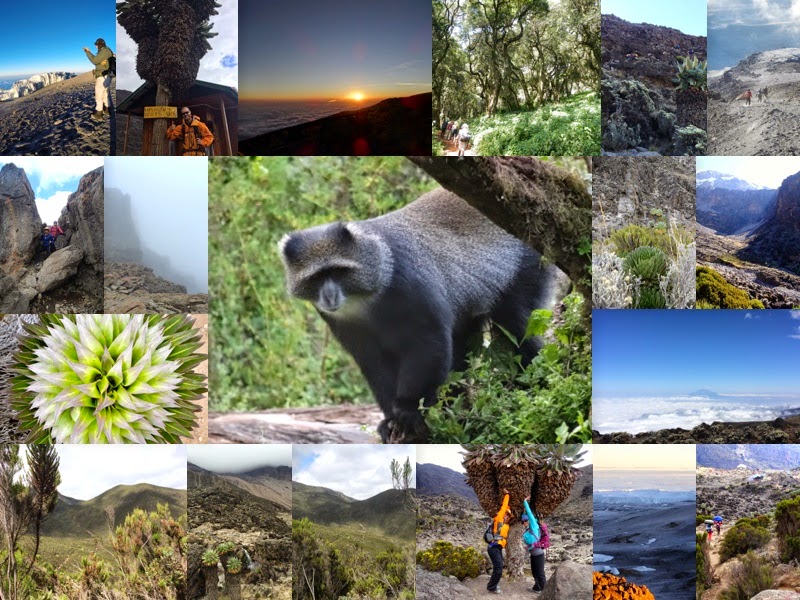
We hiked the Lemosho route for 8 days, to be assured of good acclimatization. We had wonderful guides who continuously told us to go "pole pole" along this route. SLOW, SLOW. That was hard for a strong group of CrossFitter's who's every waking moment is trained to go "Haraka Haraka" (Faster, Faster!). After a demonstration of our incredible fitness of some pushups and squats and handstands, we had a breakthrough with one of our guides on what we are truly capable of doing and were able to pick up some speed, though still maintain a pace that would keep us successful toward our goal of summitting without getting sick!


Kilimanjaro is technically the easiest to climb of the Seven Summits .
You don’t need ropes or special mountaineering gear, or even any
previous mountain climbing experience. The youngest person to reach the
summit was six years old, and the eldest was 83. That does
not mean Kilimanjaro is risk-free. Rock slides and acute altitude
sickness kill ten climbers on average each year.
Kilimanjaro is both remote and accessible. Kilimanjaro is located in
Tanzania, just south of the equator, next to the Serengeti. But regular
flights fly nonstop from Europe to the Kilimanjaro airport. Around the
mountain there’s surprisingly good support infrastructure for an
impoverished country—decent hotels, outfitters, gear to rent, ground
transportation. On the mountain there are sleeping huts along the main
route, with porters who carry and set up tents and kitchen facilities on
the other routes.
Park Rangers weigh all the bags coming on and off the mountain and
trekking companies pay heavy fines if the bags come down light. This
greatly reduces dumping on the trail. There are basic outhouses along
the way what while far from luxurious, provide privacy and keep the
mountain clean. There are only seven trails up to the summit, and no
roads. As a result, despite relatively heavy traffic, the mountain has
retained its wild nature.

Kilimanjaro one of the world’s greatest natural wonders: a snow covered
mountain on the equator, an ocean of green forest surrounded by dry
savannah. Climbing Kilimanjaro is like walking from the equator to the
North Pole in a week, providing dramatic changes in vegetation and
animal life day by day. Kilimanjaro is also a sky island. Its high
altitudes have created habitat for strange and unique life forms found
only on a few other peaks on the planet, such as the delicate stoya
flower, the hardy Everlasting flower, and the bizarre Giant Sinesio Kilimanjaro tree that only grows above 4,000m (13,000 ft.).
Kilimanjaro is a hot spot for studying climate change.
Ice cores show the glaciers to be 11,700 years old—and yet they will
all be gone in the next 20-30 years. One researcher put it like this: “You can stand next to the ice and see
the glaciers turning to vapor before your eyes.”
Climbing Kilimanjaro contributes to a thriving local economy, generating
about $20 million/year. Guides, porters, cooks, hotel staff, food
producers, travel and trekking agencies, merchants, construction
companies and banks all create local jobs in a region that remains one
of the poorest on earth.
Kilimanjaro inspired a continent to freedom. Kilimanjaro belongs to
Tanzania, the first nation in Africa to win independence from colonial
powers. Before independence in 1959,
soon-to-be President Julius Nyerere said: “We, the people of Tanganyika,
would like to light a candle and put it on the top of Mount Kilimanjaro
which would shine beyond our borders giving hope where there was
despair, love where there was hate, and dignity where before there was
only humiliation.” Today, the summit is called Uhuru Peak–Uhuru is the
Swahili word for “Freedom.”
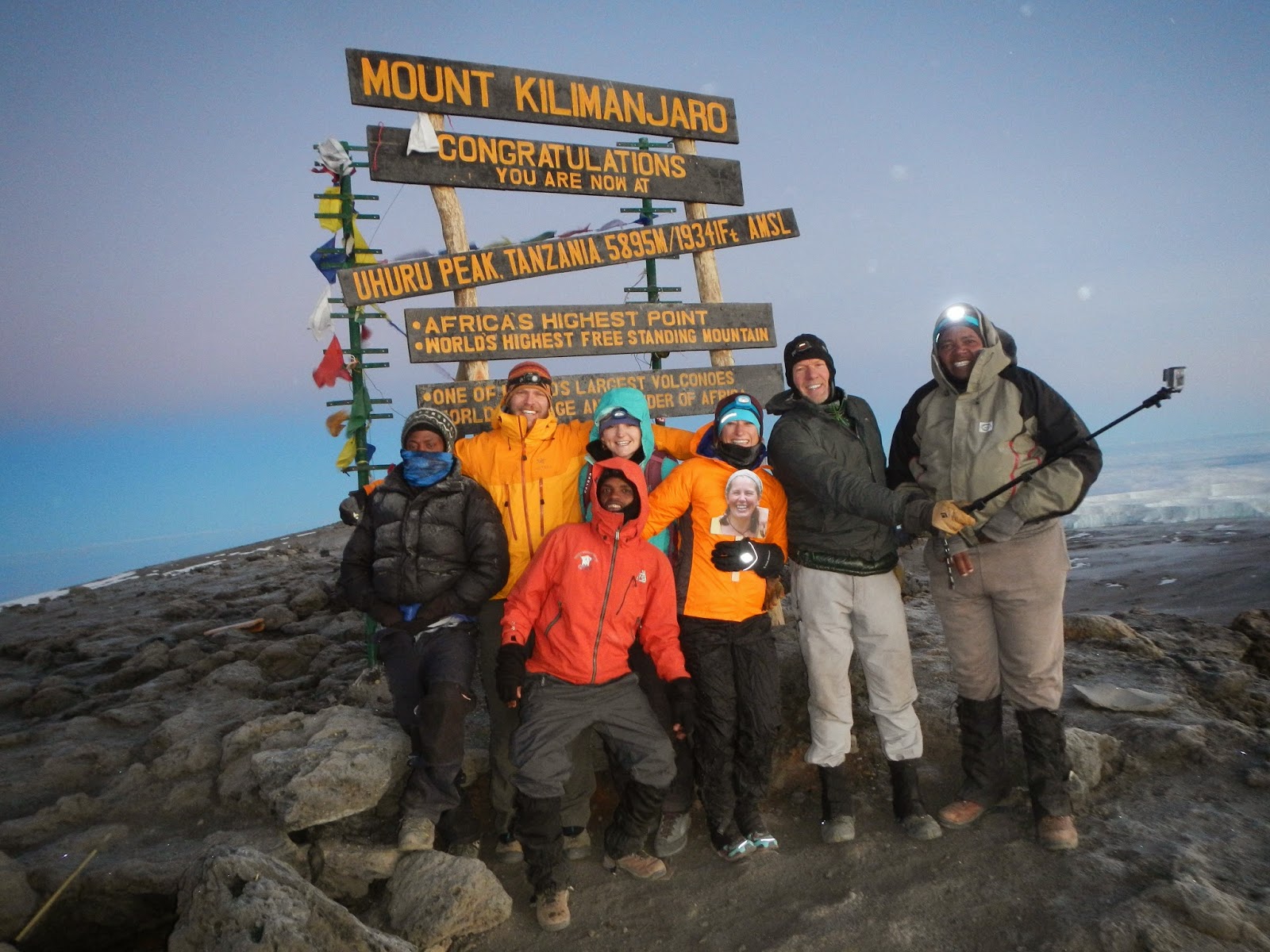
People climb Kilimanjaro to mark a personal accomplishment. Individuals
climb the mountain to mark important transitions: their graduation,
their retirement, a marriage (we are marking our 12th anniversary!). Kilimanjaro inspires transformation. When you climb Kilimanjaro and
stand on the roof of Africa, you see the world a different way. What
seemed impossible in your life might just be do-able. The mountain top is
a place for vision, inspiration, and a new beginning. As the famous
song by Juluka goes: “I’m sittin’ on top of Kilimanjaro, I can see a new
tomorrow. I’m sittin’ on top of Kilimanjaro. I cast away all my
sorrows.” We brought Angie's "flat-Stanley" image with us to share her smile up there, to take her spirit with us, and help her be inspired to stay strong through her treatments. I hope that brings you some more smiles and know you're loved, Ang!
Mt. Kili on
Vimeo.
Mt. Kilimanjaro's mantra: "Pole Pole" - Slow, Slow..... Take your time and enjoy the journey!
 The seminar staff had a great introduction to Bogota by dining at the EXPERIENCE restaurant, Andres DC - the city version of Andres Carne de Res, which is a huge restaurant on the outskirts of the city and has been a popular circus of an establishment out there for a long time. This place is fantastic - 5 floors of colorful mayhem with TV's on each floor to show you what you're missing on all the others. Super fun! See it if you're ever in Bogota!


 Thank goodness for English Speaking translations on the menu! I copied this and took it with us to other restaurants, later!


 Loved our hostel in Valparaiso! Lots of fun artwork!
 Our last stop in this area was to visit CrossFit Reñaca in Viña del Mar/Valparaiso, where had 2 days of great workouts and instruction by one of the national Olympic Weightlifting coaches in Chile! What a treat! This gym has in incredible location right on the beach, with amazing views out it's panoramic windows! Thanks to Lucas, Bastian, and Grisel for their warm hospitality and tolerating our spotty Spanish!